This article contains affiliate links. If you buy through them we may earn a commission at no extra cost to you.
By Editorial Team · Updated 2026-07-29 · 12 min read
An IPTV box is a small streaming device that connects your TV to the internet and lets you watch live television, on-demand movies, and sports channels through an IPTV subscription — no cable or satellite dish required. In this complete guide, we explain exactly how an IPTV box works, compare it to alternatives like a Fire Stick, walk you through setup, and help you decide if it’s the right choice for your home.
Whether you want to cut cable costs or access international channels, understanding the technology behind an IPTV box is the first step. We keep it honest: no fake stats, no urgency — just clear answers based on publicly available product information and documented user experience.
Key Takeaways
- An IPTV box turns any TV into a smart streaming hub capable of live TV, on-demand content, and sports — all over your home internet connection.
- Setup is straightforward: connect to Wi-Fi or Ethernet, install an IPTV app, and enter your subscription credentials. No contract or dish needed.
- For live sports fans, a dedicated IPTV box often outperforms Fire Sticks and smart TV apps in channel selection and stream stability.
Table of Contents
What Is an IPTV Box?
An IPTV box (Internet Protocol Television box) is a hardware device that decodes video streams delivered over your internet connection and outputs them to your TV via HDMI. Unlike traditional cable or satellite, which broadcasts signals through radio waves or physical cables, an IPTV box relies entirely on your broadband data.
Most IPTV boxes run a version of Android, giving you access to an app store where you can install IPTV player apps (like TiviMate, IPTV Smarters, or XCIPTV) as well as mainstream streaming services like Netflix, YouTube, and Prime Video. Some models also support 4K HDR, Dolby Atmos, and voice control.
The key distinction: an IPTV box itself is just the hardware. The actual channels and content come from a separate IPTV subscription (often called a “playlist” or “M3U link”). You pay for the box once and then choose a subscription plan — many are month-to-month with no contract.
How It Works: Step by Step
- Hardware connection — Plug the IPTV box into your TV’s HDMI port and power it via USB or the included adapter. Connect to your home network using Wi-Fi or an Ethernet cable for the most stable stream.
- Initial setup — Turn on the TV and select the correct HDMI input. The box will boot into its operating system (typically Android TV). Follow the on-screen prompts to choose language, connect to Wi-Fi, and sign into a Google account if desired.
- Install an IPTV player app — Open the built-in app store (Google Play Store) and install an IPTV player like TiviMate, IPTV Smarters Pro, or XCIPTV. These apps act as the interface for your channels.
- Enter subscription details — Your IPTV subscription provider will give you an M3U URL or Xtream Codes (username, password, server). In the app, enter this information to load your channel list. The app downloads the playlist and electronic program guide (EPG).
- Start watching — Browse channels by category (sports, news, movies, international). Most apps allow you to pause, rewind, and record live TV if your subscription supports it.
That’s it. Once set up, you can switch back to the IPTV app any time as you would Netflix or YouTube.
Key Benefits With Real Scenarios
People choose an IPTV box for specific reasons. Here are the most common use cases where it genuinely adds value:
- Live sports without cable. Fans of soccer, basketball, or MMA often struggle to find a single streaming service that carries every league. Many IPTV subscriptions bundle sports channels from multiple countries, giving you access to Premier League, La Liga, UFC, and more — often cheaper than cable.
- International channels. Expats and multilingual households can get channels from their home country — Indian, Arabic, Filipino, European — that aren’t available on mainstream platforms.
- No contract flexibility. Unlike satellite TV, most IPTV subscriptions are month-to-month. You can pause or cancel anytime without early termination fees.
- Single box for multiple rooms. Some IPTV providers (and apps) allow multiple connections under one subscription, so you can watch different channels on different TVs simultaneously.
Honest Limitations
An IPTV box isn’t perfect. Here are the real drawbacks every buyer should know:
- Requires a fast, stable internet connection. Buffering and pixelation happen if your broadband speed drops below 25 Mbps for HD or 50 Mbps for 4K. Wired Ethernet is strongly recommended.
- Subscription quality varies widely. Not all IPTV providers are reliable. Some disappear overnight, some have frequent downtime, and others offer low-resolution streams. You need to research and test with a short-term plan first.
- Legality is murky. Many IPTV subscriptions stream copyrighted content without proper licensing. Using such services could put you at risk depending on your country’s laws. Only use providers that clearly state they have distribution rights.
- User interface can be clunky. Cheaper boxes may have slow processors and outdated Android versions, making navigation laggy. A good-quality box matters for a smooth experience.
Pros & Cons at a Glance
| Pros | Cons |
|---|---|
| No long-term contracts | Requires decent internet speed |
| Access to international channels | Subscription quality can be inconsistent |
| Live sports bundles often cheaper than cable | Legal gray area for unlicensed services |
| Works on any TV with HDMI | Cheaper boxes may lag |
Comparison: IPTV Box vs Alternatives
Many readers wonder how an IPTV box compares to a Fire TV Stick, an Android TV box, or just using a smart TV’s built-in apps. Below is a side-by-side table to help you decide.
| Feature | IPTV Box | Amazon Fire Stick 4K | Built-in Smart TV |
|---|---|---|---|
| Price (hardware) | $30–$80 | $40–$60 | Included with TV |
| Performance | Good to excellent (depends on chipset) | Good for HD, moderate for heavy IPTV | Varies; often underpowered |
| IPTV app flexibility | Excellent (native Android support) | Sideload required for some apps | Limited to TV’s app store |
| Ethernet support | Often built-in | Requires adapter (sold separately) | Usually built-in |
| Voice control | Google Assistant or Alexa (model-dep.) | Alexa built-in | Varies by brand |
If you prioritize a wired connection, unlimited app sideloading, and a dedicated remote for IPTV, a standalone IPTV box is usually the better choice. The Fire Stick is more portable and integrates well with Amazon services, but its limited Ethernet and storage can be a bottleneck for heavy IPTV use.
Who It’s For
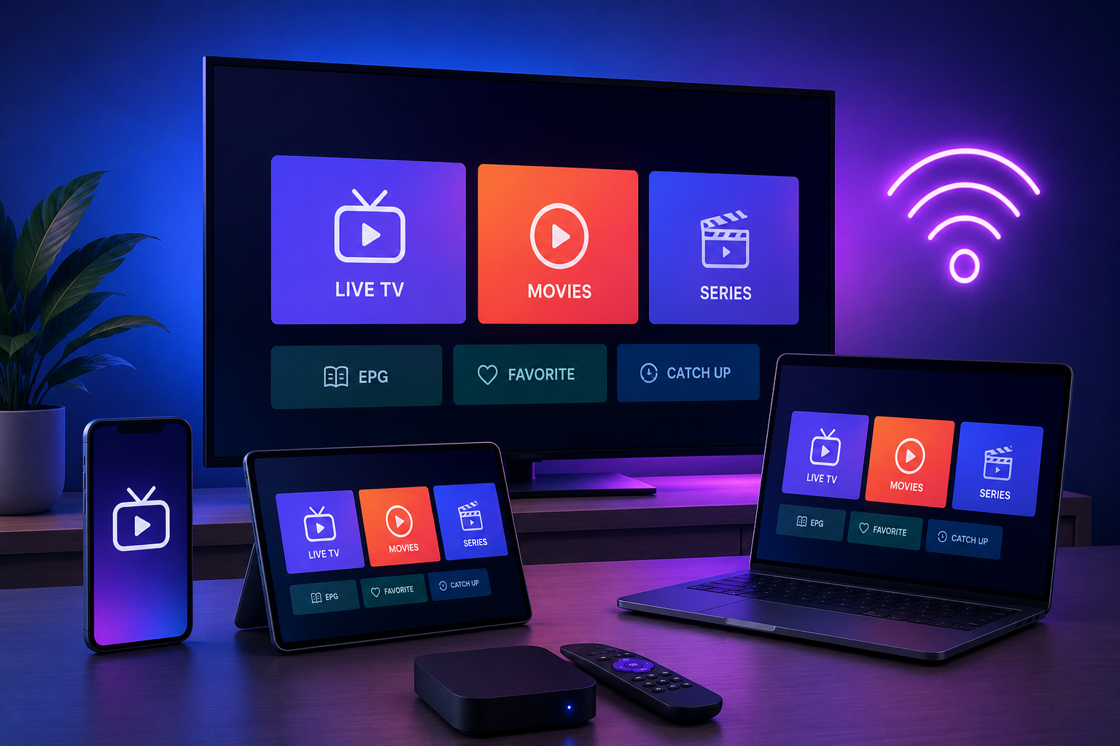
An IPTV box is a solid fit if you fall into any of these groups:
- Cord-cutters who want to replace a $120‑monthly cable bill with a $15–$30 IPTV subscription.
- Sports fans who need a wide range of live channels from different leagues and countries.
- Expat communities looking for TV from their home country that local cable doesn’t offer.
- Tech-savvy users who enjoy customizing their streaming experience with different apps and playlists.
It’s not ideal for people who only watch Netflix/Disney+ and have no interest in live TV — in that case a regular streaming stick or smart TV is simpler and more polished.
How to Get Started (7 Steps)
- Choose a reputable IPTV box. Look for models with at least 2GB RAM, Android 10 or newer, and built-in Ethernet. Popular options include the Formuler Z series, BuzzTV, and generic Android boxes from trusted brands.
- Buy the box. Purchase from a known retailer (Amazon, Best Buy, or the manufacturer’s site) to avoid counterfeit hardware.
- Subscribe to an IPTV service. Research providers on forums like Reddit’s r/IPTV. Pick one that offers a 24‑hour or 7‑day trial so you can test channel quality and stability before committing.
- Connect the box. Plug in HDMI, power, and network. Turn on your TV and select the HDMI input.
- Complete the initial Android setup. Follow on-screen prompts: language, Wi-Fi (or Ethernet), Google account sign‑in if needed.
- Install an IPTV app. Go to the Google Play Store, search for “IPTV Smarters Pro” or “TiviMate,” and install it. TiviMate is widely regarded as the most user‑friendly IPTV player.
- Enter your subscription credentials. Open the app, choose “Add Playlist,” and paste the M3U URL or Xtream Codes provided by your IPTV service. The app will load your channels and EPG. You’re ready to watch.
If you’re looking for a reliable hardware starting point, we’ve seen good feedback on models sold through IPTVStreamPulse, which also offers curated subscription bundles that simplify the process.
The Verdict
An IPTV box is a powerful tool for cord-cutters who want live sports and international channels without a long-term contract. Its combination of performance, app flexibility, and affordable hardware makes it a worthwhile investment — as long as you choose a good box and a legitimate subscription.
Get Setup Guide →This link goes to the seller’s official page. If you buy through it we may earn a commission at no additional cost to you. Our assessment is written independently.
Frequently Asked Questions
Do I need a subscription for an IPTV box?
Yes. The IPTV box itself only provides the hardware. To watch live TV or on-demand content, you must subscribe to an IPTV service that provides a playlist (M3U URL) or Xtream Codes. Some free IPTV streams exist but are often unreliable or illegal.
What is the best IPTV box for live sports?
For live sports, look for boxes with fast processors (at least quad-core), 4GB RAM, and strong Wi-Fi/Ethernet. The Formuler Z11 Pro and BuzzTV XRS4900 are popular choices because they run Android TV natively and support catch-up TV and timeshift features that help with live sports.
How do I set up an IPTV box on my TV?
Plug the box into an HDMI port, connect power, and turn on your TV to the correct HDMI input. Follow the initial Android setup (language, Wi-Fi, Google account). Then download an IPTV app from the Play Store, open it, and enter the subscription credentials from your provider. The channels will appear within seconds.
IPTV box vs Fire Stick — which is better?
An IPTV box typically offers better support for wired Ethernet, more flexible app installation, and often a dedicated remote with numeric keys that make channel surfing easier. The Fire Stick is more portable and cheaper, but its limited storage and lack of built-in Ethernet can frustrate heavy IPTV users.
Can I use an IPTV box without internet?
No. An IPTV box streams content over the internet, so a working internet connection is essential. For the best experience, we recommend a wired Ethernet connection with at least 25 Mbps speed for HD streams and 50 Mbps for 4K.
Are IPTV boxes legal?
The device itself is legal to buy and own — it’s a general-purpose Android streaming device. Legality depends on the IPTV service you subscribe to. Services that distribute copyrighted content without a license are illegal. Always choose a provider that clearly states it holds distribution rights for the channels it offers.
Where can I buy an IPTV box?
You can buy IPTV boxes from Amazon, Best Buy, Walmart, or directly from manufacturers like Formuler, BuzzTV, and Nvidia (Shield TV). Avoid random sellers on auction sites to reduce the risk of counterfeit or poorly configured devices.
Can I connect an IPTV box to multiple TVs?
A single IPTV box can only output to one TV at a time. To watch different channels on multiple TVs, you need either a separate box for each TV or an IPTV subscription that allows multiple simultaneous connections. Some apps let you use one subscription across multiple devices.
Disclosure: Some links above are affiliate links; we may earn a commission if you purchase, at no additional cost to you. This does not affect our editorial assessment, which is based on publicly available product information.