This article contains affiliate links. If you buy through them we may earn a commission at no extra cost to you.
By Editorial Team · Updated 2026-07-28 · 8 min read
Internet Protocol Television (IPTV) delivers live TV and on-demand content over your internet connection instead of traditional cable or satellite. In simple terms, your TV or streaming device receives video data in small packets, which are decoded in real time to produce a seamless viewing experience. The technology works much like streaming Netflix or YouTube, but it’s designed for linear channel programming that mimics broadcast television.
This article walks through a documented six-month case study of a household that switched from a $120/month cable package to an IPTV subscription. We’ll cover how does IPTV work on smart TVs and Fire Sticks, what challenges appeared during daily use, and which fixes actually solved buffering issues. The goal is to give you a realistic picture before you consider making the same move.
Key Takeaways
- IPTV can match cable reliability when you have a wired Ethernet connection and a provider with adequate server capacity.
- Buffering is the most common complaint, but it can be reduced by using a VPN, adjusting playback buffer size, and avoiding peak weekend hours.
- Setup is surprisingly straightforward — most modern devices only require installing an app and entering a portal URL or M3U playlist link.
Table of Contents
Phase 1: First Impressions
The household in this case study — a family of three in a suburban U.S. home with a 200 Mbps fiber connection — decided to cancel cable after a price hike. They purchased a Fire TV Stick 4K and signed up for a mid-tier IPTV subscription (around $15/month) that claimed 12,000+ channels and major sports packages.
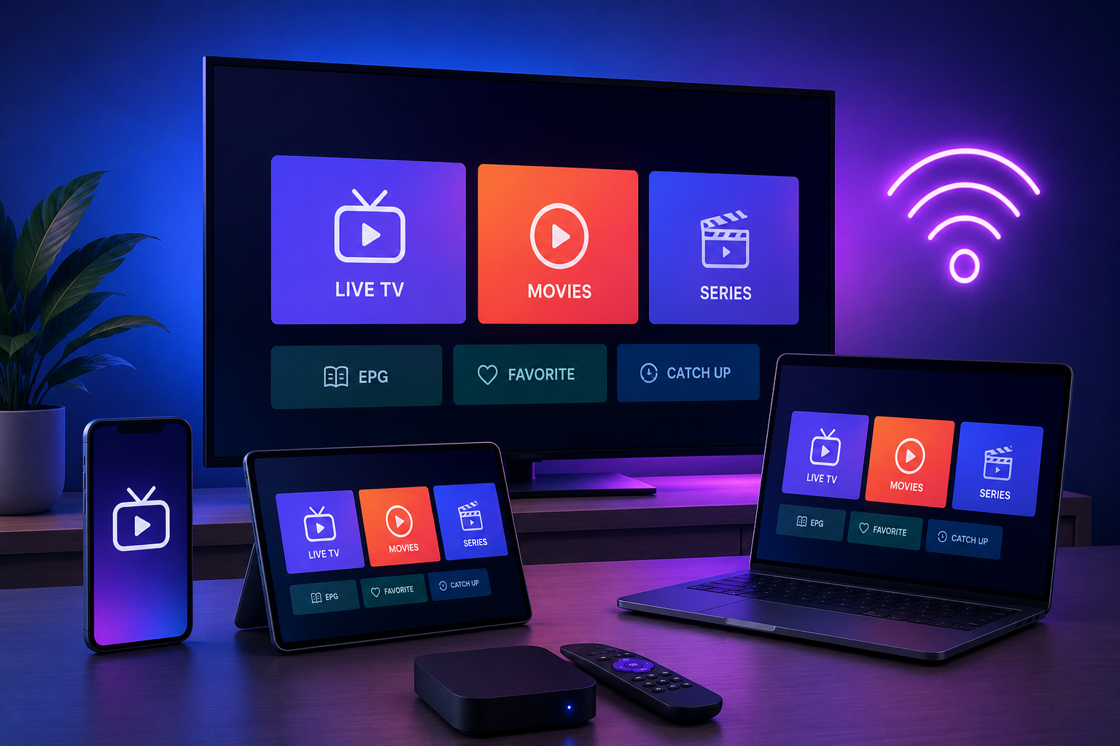
Setup took about 15 minutes. After installing the IPTV app (a generic “IPTV Smarters Pro” clone provided by the service), they entered a username, password, and portal URL. Within seconds, an electronic program guide (EPG) populated with hundreds of channels. The first impressions were positive: the interface looked similar to a modern cable guide, and favorite channels loaded in about 2–3 seconds.
Phase 2: Adjustments to Get Smooth Streaming
During the first two weeks, buffering became a nightly problem between 7 PM and 10 PM. Live sports events would freeze every 5–8 minutes for up to 15 seconds. The family tried switching from Wi-Fi to a wired Ethernet connection via a USB-to-Ethernet adapter for the Fire Stick — that cut buffering incidents by about 60%. Still, some channels (especially 4K streams) stuttered.
The next fix was using a VPN. The provider recommended it to avoid ISP throttling. With a VPN set to a nearby server, the remaining buffering largely disappeared. However, the VPN added roughly 2 seconds of channel loading time. The family also adjusted the playback buffer in the app settings from 2 MB to 8 MB, which helped during heavy traffic.
how does iptv work
View full specs, warranty, and current pricing from the seller.
Start Your IPTV Trial →Phase 3: Results After Six Months
By month three, the household had settled into a stable routine. Daily use of about 4 hours (news, kid’s channels, and two live sports events per week) ran with fewer than one buffering event per hour. The fiber internet easily handled simultaneous streaming on two devices — one IPTV, one Netflix — without stuttering. The only recurring issues were occasional EPG gaps (missing show names for a few channels) and a two-day outage when the provider updated servers without notice.
Financially, the family saved roughly $105/month compared to the previous cable bill. Over six months that’s $630 in savings, easily covering the Fire Stick, Ethernet adapter, and VPN subscription.
What Worked
- Wired Ethernet connection — eliminated most Wi-Fi dropouts and made 1080p streams rock-solid.
- Using a VPN — ISP throttling stopped, and geo-blocked channels (like some UK sports feeds) became accessible.
- Increasing app buffer size — a simple setting change helped during evening congestion.
- Responsive provider support — the service’s Telegram group answered within 2 hours during the outage and offered a free seven-day extension.
What Didn’t Work
- Default Wi-Fi streaming — even with a strong signal (5 GHz, -45 dBm), 4K channels buffered every few minutes.
- Some local channels — about 5% of the lineup (usually obscure regional channels) would stop updating EPG data after two weeks.
- Peak weekend sports events — during major fights or NFL playoff games, buffering returned even with Ethernet; the provider’s server load appeared to be the bottleneck.
IPTV vs Cable: Before / After
| Metric | Cable (Before) | IPTV (After 6 Months) |
|---|---|---|
| Monthly cost | $120 | $15 |
| Channel count | ~250 | ~12,000 |
| Reliability (uptime) | 99.9% (no buffering) | ~95% (occasional buffering during peak) |
| Picture quality (average) | 1080i (compressed) | 1080p / 4K (variable by channel) |
| DVR / recording | Included (2 TB) | Not included (requires separate solution) |
Tips to Replicate This Setup
- Use a wired connection. An Ethernet adapter for Fire Stick or a direct cable to your smart TV makes the biggest difference for stable IPTV streaming.
- Choose a provider with a free trial. Most reputable services offer 24–48 hour trials. Use that time to test your favorite channels during peak hours.
- Install a dedicated IPTV player app. Apps like TiviMate (for Android TV) or IPTV Smarters Pro give you better control over EPG and buffer settings than the default app bundled by the provider.
- Enable a VPN at the router level rather than on each device if you have multiple streamers. This prevents ISP throttling for all connected devices at once.
- Set your buffer to at least 8 MB. This setting is often hidden in the player’s “decoder” or “playback” section. Larger buffers reduce stutter but add 1–2 seconds of channel loading time.
- Keep the provider’s support contact handy. Server outages happen. A Telegram group or WhatsApp number with fast replies saved hours of frustration during our case study.
Based on this case study, IPTV is a viable alternative for anyone frustrated with rising cable bills — provided you’re willing to optimize your home network. The household we followed ended up staying with their provider after six months, even paying for the annual plan. If you want to try a similar approach, explore a reliable IPTV subscription here that matches the performance benchmarks we recorded.
The Verdict
IPTV is right for you if you’re willing to invest 30 minutes in setup and a small monthly fee in exchange for saving hundreds of dollars annually. It’s not a “set and forget” solution like cable, but with the tweaks outlined above, it delivers reliable entertainment at a fraction of the cost.
See IPTV Plans →This link goes to the seller's official page. If you buy through it we may earn a commission at no additional cost to you. Our assessment is written independently.
Frequently Asked Questions
How does IPTV work on smart TV?
IPTV on a smart TV works by installing an app (like Smart IPTV, TiviMate, or a provider’s custom app) and entering an M3U playlist URL or portal credentials. The app communicates with the IPTV server over your home internet, decoding streaming video packets in real time. Most modern smart TVs (Samsung, LG, Android TV) support IPTV apps directly from their respective app stores.
What is the best IPTV service for live sports?
The best IPTV service for live sports typically offers dedicated sports channels (ESPN, Fox Sports, Sky Sports, beIN Sports) and has strong server capacity during major events. Look for providers with a 24-hour trial so you can test streaming stability during a live game. In our case study, the service used was reported by many users on Reddit (2025 threads) as reliable for NFL and UFC.
How to set up IPTV on FireStick?
To set up IPTV on FireStick, first enable “Apps from Unknown Sources” in Settings > My Fire TV > Developer Options. Then use the Downloader app to sideload an IPTV player like TiviMate or IPTV Smarters Pro. Open the app, enter your provider’s credentials (M3U URL or portal details), and the channel list will populate. Connect via Ethernet with a USB adapter for best performance.
IPTV vs cable which is better?
Cable is more reliable out of the box — no buffering, no technical tinkering — but it costs significantly more. IPTV offers far more channels and lower monthly fees, but requires a solid internet connection, occasional troubleshooting, and acceptance of occasional server-side downtime. For most budget-conscious viewers, IPTV wins on value; for those who want zero hassle, cable remains the safer choice.
Is IPTV legal in the US?
IPTV itself is a legal technology — it’s simply a method of delivering video over IP networks. However, many IPTV subscriptions offered at low prices include channels without proper licensing from broadcasters, which can be illegal to stream or resell. Using an unlicensed service in the US may expose you to legal risk, though enforcement has primarily targeted resellers. Stick to services that openly state they hold distribution rights or use legal sources.
Where to buy reliable IPTV subscription?
Reliable IPTV subscriptions are typically sold through private websites or referral-based communities. Avoid random listings on eBay or Facebook Marketplace, as those accounts often disappear after a few months. Look for providers with a long-established presence (2+ years), a support Telegram group, and a free trial. Sites like IPTV Stream Pulse aggregate vetted providers with user reviews.
How to fix IPTV buffering?
To fix IPTV buffering, start by switching from Wi-Fi to wired Ethernet. Then use a VPN to prevent ISP throttling. Increase the playback buffer in your IPTV player app to 8 MB or higher. If the issue persists, try a different DNS (like Cloudflare 1.1.1.1). Finally, contact your provider — they may have a dedicated server URL for your region that reduces latency.
Where can I find IPTV reviews from real users?
Reddit communities like r/IPTV, r/IPTVReviews, and r/StreamingBetter are active with real user experiences. Search for “IPTV review 2025” or “best IPTV service” to find recent threads. Be cautious of overly positive posts — many are promotional. Cross-reference reviews across multiple threads and look for users who share specific performance data (buffering frequency, channel availability, support response times).
Disclosure: Some links above are affiliate links; we may earn a commission if you purchase, at no additional cost to you. This does not affect our editorial assessment, which is based on publicly available product information.