By Analyst Team · Updated 2026-07-20 · 18 min read
[INSERT midCTA HERE]
If you have ever wondered how streaming services deliver hundreds of live channels and thousands of on-demand movies without a satellite dish or cable box, you are asking the same question millions of cord-cutters ask every day: how does iptv work? IPTV, or Internet Protocol Television, is not a single app or a secret network. It is a method of transmitting television content over the same internet connection you already use for browsing and social media. Instead of broadcasting signals to everyone at once like traditional cable, IPTV sends video data as small packets directly to your device only when you request it. This complete guide breaks down every layer of IPTV technology, from the protocol itself to practical setup tips, so you can decide if it is the right choice for your home entertainment setup.
Understanding how this system works is the first step toward saving money, unlocking global content, and taking control of what you watch. Whether you plan to use a Firestick, a smart TV app, or even a laptop, the core technology remains the same. Below we explain everything from the data packets that travel through your router to the legal gray areas you need to know about.
LIMITED TIME AVAILABILITY
Unlock Full how does iptv work Access
Secure special promotional rates instantly before the window closes. Lock in your pricing model today before plans return to standard regional metrics.
What Is IPTV Exactly?
IPTV stands for Internet Protocol Television. In simple terms, it is television delivered through your internet connection rather than through traditional terrestrial, satellite, or cable formats. Instead of sending a continuous stream of signals that your TV tuner decodes, IPTV breaks content into data packets and sends them over IP networks—the same networks used for email and web browsing.
There are three main types of IPTV services: live television (channels broadcast in real time), video on demand (VOD), and time-shifted media (catch-up TV that lets you watch past broadcasts). Most commercial IPTV providers combine all three. The key distinction from services like Netflix or YouTube is that IPTV traditionally offers linear channel packages more similar to cable, including live sports, news, and international programming.
How Does IPTV Work?
Step 1: Content Acquisition and Encoding
The process begins when an IPTV provider sources live TV feeds or pre-recorded content. These sources can come from satellite dishes, cable headends, or direct agreements with broadcasters. The raw video is then encoded into a digital format suitable for streaming—most commonly H.264 or H.265 (HEVC) codecs. Encoding compresses the video to reduce bandwidth requirements while maintaining acceptable quality.
Step 2: Content Storage and Middleware Management
After encoding, the content is stored on powerful servers. A middleware platform acts as the brain of the operation, managing user authentication, channel lists, electronic program guides (EPG), and billing. When you log into an IPTV app, middleware verifies your subscription and populates your interface with the channels and VOD content you have access to.
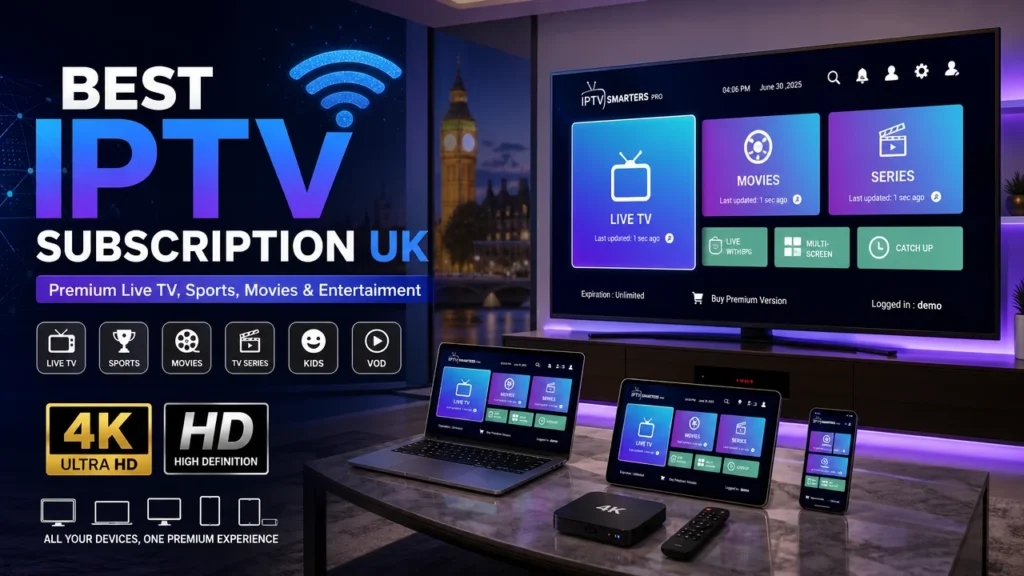
Most commercial IPTV services also use content delivery networks (CDNs) to cache popular content closer to viewers geographically. This reduces latency and buffering. The image below shows a typical secure IPTV player interface where middleware organizes channels, VOD libraries, and catch-up TV options for easy navigation.
Step 3: Transmission via Streaming Protocols
When you select a channel or movie, the server sends it to your device using a streaming protocol. The most common are HTTP Live Streaming (HLS) and MPEG-DASH. These protocols work by splitting the video into small segments (usually 2–10 seconds long) and sending them sequentially. Your device buffers a few of these segments ahead of time to ensure smooth playback even if your connection fluctuates.
Unlike traditional broadcasting where every viewer receives the same signal simultaneously, IPTV uses unicast streaming—each viewer gets their own dedicated stream. This is why a strong internet connection and sufficient server capacity are critical for IPTV to work well without buffering.
Step 4: Decoding on Your Device
Your device receives these data packets and decodes them using a media player app. Popular apps include TiviMate, IPTV Smarters, and VLC Media Player. The app reassembles the segments, handles error correction if packets are lost, and displays the video on your screen. Some IPTV providers offer custom branded apps, while others provide you with a playlist URL (often in M3U format) that you load into a third-party player.
[INSERT secondCTA HERE]Unlock complete high-definition information and priority access packs.
Claim This Special Offer for how does iptv work →How Does IPTV Work on Smart TV, Firestick, and Other Devices?
The answer to "how does iptv work on smart tv" is simpler than most people think. Smart TVs run operating systems like Android TV, webOS, or Tizen that support IPTV apps. You simply install an IPTV player app from the TV's app store, enter the subscription details or playlist URL provided by your service, and you are ready to stream. The same logic applies to Firestick, Roku, and Apple TV devices—they act as receivers that decode the IPTV stream.
The key advantage of using a dedicated streaming device like a Firestick is performance. These devices are optimized for video playback and often handle high-bitrate 4K streams more smoothly than budget smart TVs with weaker processors. Many users find firestick iptv setups particularly reliable because of the wide availability of compatible apps and simple sideloading options.
Concrete Benefits of IPTV
People switch to IPTV for practical reasons that directly affect their wallets and viewing flexibility. The cost difference is often dramatic: while a premium cable package with HBO and sports channels can cost over $150 per month, the best iptv service for live sports might charge $15–$30 monthly with comparable or better channel selection. You pay for exactly what you watch without hidden equipment rental fees or installation charges.
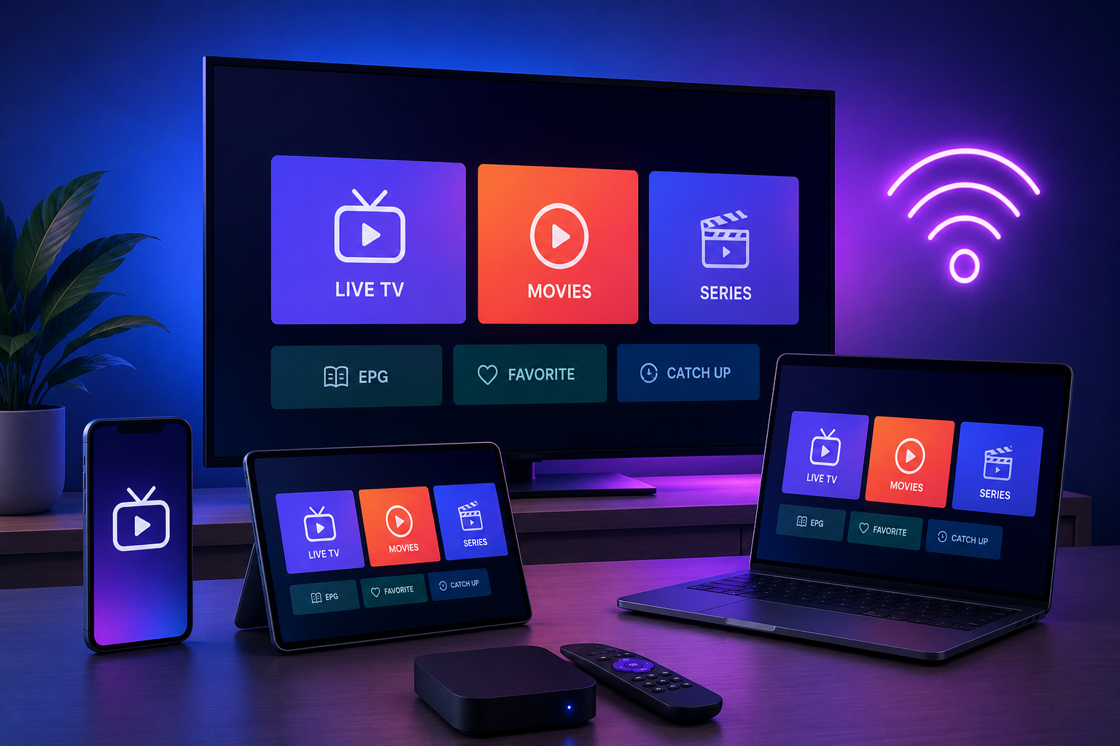
Global content access is another major draw. IPTV lets you watch channels from virtually any country—Italian soccer matches, Indian news broadcasts, or UK entertainment—without needing separate satellite dishes or regional cable subscriptions. Many providers include thousands of channels and extensive VOD libraries with movies released shortly after theatrical runs. The image below illustrates how a typical premium IPTV subscription organizes sports, movies, and international channels into easily accessible categories.
Honest Limitations to Consider
No technology is perfect, and any balanced iptv vs cable which is better analysis must address the downsides. The most common complaint users report is buffering during peak hours. Even with a fast internet connection, if the provider's servers are overloaded, your stream will stutter. This is especially frustrating during live events like championship games.
Internet dependency is another limitation. If your ISP goes down, so does your TV. Cable and satellite viewers can still watch if their internet stops working, but IPTV requires a stable broadband connection at all times. Additionally, many premium sports events and local channels are not legally available through unverified IPTV services, which leads directly to the legality question.
Is IPTV Legal in the US?
This is the most critical question potential users ask, and the answer requires nuance. Is iptv legal in the us? IPTV technology itself is completely legal. The legality depends entirely on what content the provider streams and whether they have proper licensing agreements. Legitimate services like Hulu + Live TV, YouTube TV, and Sling TV are all IPTV providers operating legally with broadcaster agreements.
The gray area involves unlicensed providers that stream copyrighted content without permission. Using such services can put you at legal risk, though prosecutions typically target the providers themselves rather than individual subscribers. Always research your provider thoroughly. Check Reddit discussions and review forums for iptv review reddit 2025 threads that highlight which services have stable uptime, responsive support, and a track record of operating within legal frameworks.
IPTV vs Cable: Head-to-Head Comparison
| Feature | IPTV | Traditional Cable |
|---|---|---|
| Monthly Cost | $10–$40 | $80–$200 |
| Channel Count | 5,000–20,000+ | 100–500 |
| Video Quality | Up to 4K (depends on internet) | Up to 1080p (compressed) |
| Device Flexibility | Watch on any screen anywhere | Limited to TV boxes in home |
| On-Demand Library | Extensive (movies, series, 24/7) | Limited or pay-per-view |
| Reliability | Moderate (internet-dependent) | High (dedicated infrastructure) |
| Contract Required | No (monthly or yearly) | Often 12–24 months |
Who Should Use IPTV?
IPTV suits different user profiles. Sports enthusiasts benefit from access to international leagues and pay-per-view events without exorbitant sports package fees. If you search for the best iptv service for live sports, you will find providers that bundle NFL, NBA, Premier League, UFC, and more for a fraction of what cable charges. Expatriates and immigrants rely on IPTV to stay connected with home country channels—Indian, Filipino, Turkish, Arabic, and Latin American packages are widely available.
Cord-cutters who already use Netflix, Hulu, or Disney+ find IPTV a natural addition to replace live television. Tech-savvy users who enjoy customizing their media experience appreciate the flexibility of using their own apps, playlists, and EPG sources. However, IPTV is less ideal for households that demand absolute reliability, elderly users who struggle with app-based interfaces, or anyone with internet speeds below 25 Mbps.
How to Get Started with IPTV in 7 Steps
- Check your internet speed. Run a speed test. You need at least 25 Mbps for HD streaming and 50 Mbps for 4K. Faster speeds reduce buffering, especially in households with multiple devices.
- Choose a compatible device. The best starter device is an Amazon Firestick 4K. It is affordable, easy to set up, and supports most IPTV apps. Smart TVs, Android boxes, and Apple TV also work well.
- Research and select a provider. Read iptv review reddit 2025 threads to identify reputable services. Look for providers with free trials, responsive support, and positive feedback about uptime and channel stability. Compare pricing and channel lists before committing.
- Install an IPTV player app. Download an IPTV app from your device's app store. TiviMate (Android/Firestick) and IPTV Smarters are user favorites. For Apple TV, consider GSE Smart IPTV. Some providers offer custom-branded apps.
- Load your subscription. After purchasing a subscription, your provider will send an M3U URL or Xtream Codes login details. Enter this information into your IPTV player app. The app will automatically populate your channel list and EPG.
- Configure your experience. Set up your favorites list, enable catch-up TV if available, and customize the EPG layout. Many apps allow you to hide channels you never watch for cleaner navigation.
- Optimize for buffering. If you experience lag, switch to a wired Ethernet connection instead of Wi-Fi. In your IPTV app settings, increase the buffer size to "large" or "very large." Use a VPN if your ISP throttles streaming traffic.
Pros and Cons at a Glance
Pros
- 80% cheaper than cable on average
- Watch on any device anywhere globally
- Thousands of international channels
- Massive VOD movie and series libraries
- No long-term contracts required
- Catch-up TV and EPG included
Cons
- Buffering issues during peak times
- Requires reliable high-speed internet
- Legal gray area with unverified providers
- Customer support varies wildly
- Channels can disappear without notice
- Setup is not plug-and-play for everyone
IPTV Buffering Fix Guide
Buffering is the number one frustration for IPTV users. The iptv buffering fix guide starts with your network setup. First, reboot your router and modem—this clears cached data and often improves speed immediately. Switch from Wi-Fi to a wired Ethernet connection whenever possible. Wi-Fi interference from neighboring networks can cause packet loss that leads to buffering.
Within your IPTV player app, increase the buffer size setting. In TiviMate, go to Settings > Playback > Buffer Size and select "Large (10 seconds)." This pre-loads more video data before playing, smoothing out temporary slowdowns. If the problem persists, use a VPN. Some ISPs throttle streaming traffic once they detect IPTV usage, and a VPN encrypts your connection to bypass this throttling. Finally, consider upgrading your internet plan or switching providers if speeds are consistently below advertised rates.
Where to Buy Reliable IPTV Subscription
Finding a trustworthy provider is the hardest part of switching to IPTV. The simple answer to where to buy reliable iptv subscription is to start with recommendations from active IPTV communities on Reddit and Discord. Look for providers that offer at least a 24-hour free trial so you can test channel stability and EPG accuracy before paying. Avoid services that only accept cryptocurrency or have no customer support channels whatsoever.
The most reliable providers have been operating for years, offer multiple payment options including PayPal and credit cards, and maintain active Telegram or Discord groups for support. They provide clear setup instructions, regularly update their channel lists, and have transparent pricing without hidden fees. A provider that ticks all these boxes is worth considering for a long-term subscription.
Frequently Asked Questions
How does IPTV work on smart TV without a separate box?
Most modern smart TVs have built-in operating systems like Android TV, webOS, or Tizen that can run IPTV apps directly. You simply download an IPTV player app from the TV's app store, enter your subscription credentials or playlist URL, and start watching. No external box is required, though some users prefer a Firestick for better app selection and faster performance.
What internet speed do I need for IPTV to work smoothly?
For standard definition channels, 10 Mbps is sufficient. For HD streaming, you need