By Analyst Team · Updated 2026-08-04 · 14 min read
IPTV, or Internet Protocol Television, is a system that delivers live television channels and on-demand video over an internet connection instead of through traditional broadcast signals like cable, satellite, or antenna. The diagram above shows the core idea: a content source, an IPTV provider’s media server, and your viewing device connected through the internet. Once you grasp that simple flow, everything else — M3U playlists, Smart TV apps, EPG data, and channel switching — falls into place.
If you’ve searched for “how does IPTV work” and found yourself buried under jargon about multicast addresses, codecs, and transcoding, you’re in the right place. This complete guide explains the technology in plain English, covers practical setup steps for Smart TVs and Firesticks, compares IPTV honestly against cable, and answers the questions real users are asking in 2026.
LIMITED TIME AVAILABILITY
Unlock Full how does iptv work Access
Unlock complete high-definition information and priority access packs. Lock in your pricing model today before plans return to standard regional metrics.
What Is IPTV Exactly?
IPTV stands for Internet Protocol Television. Traditional broadcast TV sends a radio frequency signal over a cable or through the air to a tuner, which then locks on to a channel. IPTV takes a completely different approach: television content is converted into small digital data packets, transmitted over your broadband connection using the same internet protocol that your email and web traffic use, and then decoded and displayed by an app or a set-top box.
There are three main forms of IPTV:
- Live IPTV — broadcast TV channels streamed in real time, such as sports, news, and general entertainment.
- Time-shifted IPTV — catch-up television that lets you rewind, pause, or restart a program that aired earlier.
- Video on Demand (VOD) — a searchable library of movies and series you can watch whenever you like.
The key difference from cable is that IPTV is a two-way connection. Your device sends requests back to the provider’s server, which enables interactive features like VOD libraries, live pause, rewind, and advanced search. That’s why IPTV feels more like streaming a YouTube video than flipping through traditional channels.
How IPTV Works Step by Step
Let me walk you through exactly what happens between the moment a broadcaster captures a live sports game and the moment you see it on your screen.
Step 1 — Content acquisition
The IPTV provider captures live TV from broadcasters, satellite feeds, or local stations. This source can be an officially licensed feed or, in the case of unlicensed resellers, a rebroadcast of a signal from another region. The quality of this step heavily affects what you eventually receive on your screen.
Step 2 — Encoding and transcoding
Raw broadcast video arrives in high-bitrate formats that would quickly choke a domestic internet connection. The provider encodes it with modern codecs such as H.264 or H.265 (HEVC) and transcodes it at different bitrates so the stream can play smoothly on a 4K TV, a mid-range smartphone, or a slow hotel Wi-Fi connection.
Step 3 — Distribution through media servers
The prepared streams are sent to dedicated media servers, often placed inside a content delivery network (CDN). A good provider runs multiple servers in different countries, so users in the US, UK, Canada, and Australia can connect to a nearby node for lower latency and less buffering.
Step 4 — Activation and playlist access
After you subscribe, the provider sends you login credentials or an M3U playlist URL. The M3U playlist is simply a text file containing the channel list, stream URLs, and a link to the EPG (electronic program guide). This is the file your IPTV player app reads to build the interface shown in the image above.
Step 5 — Decoding and playback on your device
On your Smart TV, Firestick, computer, or set-top box, an IPTV player like IPTV Smarters, TiviMate, or IBO Player reads the playlist, connects to the stream addresses, decodes the incoming video, and renders it to the screen. A modern device with good hardware decoding will give you smoother playback and faster channel zapping than an old, underpowered one.
Step 6 — EPG updates
The electronic program guide is refreshed on a schedule so your channel list shows accurate program titles and start times. Without this update, you’d still have a channel line-up but no schedule, which would make IPTV far less convenient day-to-day.
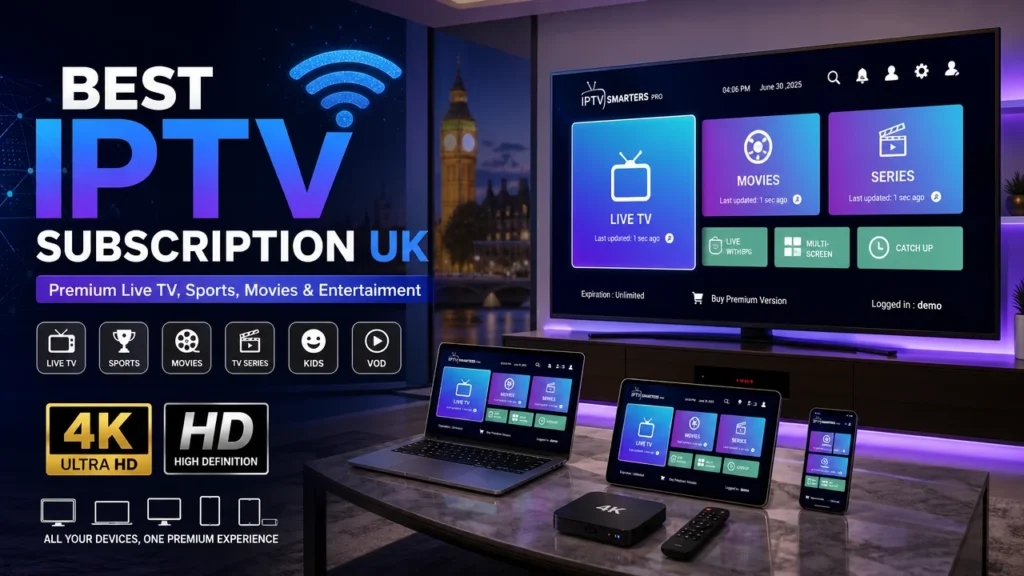
Once you understand these steps, setting up IPTV on any device becomes much easier. The 4K sports interface in the image above shows how a modern IPTV player presents live channel lists, program guides, and VOD libraries side by side. You don’t need networking or engineering knowledge — the player app does the heavy lifting for you.
Concrete Benefits for Users
Why are millions of people switching from traditional cable to IPTV every year? The benefits go far beyond saving a few dollars on the monthly bill.
- Lower cost, no contracts. Most IPTV subscriptions cost between $10 and $20 per month, compared with $80 to $150 for comparable cable packages. You can pay monthly and cancel anytime without early termination fees.
- Watch on everything. The same subscription works on a Smart TV, Firestick, Android box, iPhone, iPad, laptop, and even some gaming consoles. One playlist, every screen.
- Global channel selection. Quality providers carry channels from dozens of countries, making IPTV especially valuable for expats who want home-country news, sports, and entertainment.
- Live sports without the premium package. IPTV frequently includes networks like ESPN, Sky Sports, beIN Sports, DAZN, and BT Sport for a fraction of what cable charges for the same bundle.
- Integrated VOD library. Most services bundle a large on-demand catalog of movies and series, so you get Netflix-style content and live TV in one app.
- No dish, no coaxial cable, no hardware rental. As long as you have broadband internet and a compatible device, you’re ready.
Honest Limitations You Should Know
IPTV isn’t flawless. Being transparent about the downsides saves you from frustration and wasted money. Here are the real pros and cons side by side.
Pros
- Affordable — typically 80% cheaper than cable for similar channels
- No long-term lock-in contracts
- Works across Smart TVs, Firesticks, phones, tablets, and PCs
- Massive channel selection including international packages
- VOD movie and series library included in many plans
Cons
- Requires stable internet — at least 25 Mbps for reliable HD
- Unlicensed providers can disappear overnight
- Buffering risk during peak evening hours
- No official customer support phone line on most services
- Legal gray area depends on your provider’s licensing
IPTV vs Cable vs Satellite: Comparison Table
Still wondering whether IPTV can realistically replace your cable box? This direct comparison table should settle the argument.
| Feature | IPTV | Cable | Satellite |
|---|---|---|---|
| Monthly cost | $10–$20 | $80–$150 | $70–$130 |
| Channel count | 10,000+ common | 200–400 | 200–300 |
| Internet required | Yes — 25+ Mbps | No, but bundled often | No |
| Picture quality | Up to 4K on good plans | 1080p typical | 1080p typical |
| Device flexibility | Multiple screens included | Charges extra per box | Requires dish receiver |
| Contract length | None — monthly plans | Often 12–24 months | Often 12–24 months |
| Live sports coverage | Excellent with premium plans | Good, but costly add-ons | Good, but weather affected |
| VOD library | Included on most plans | Separate apps required | Separate apps required |
Secure special promotional rates instantly before the window closes.
Activate Your how does iptv work Subscription Now →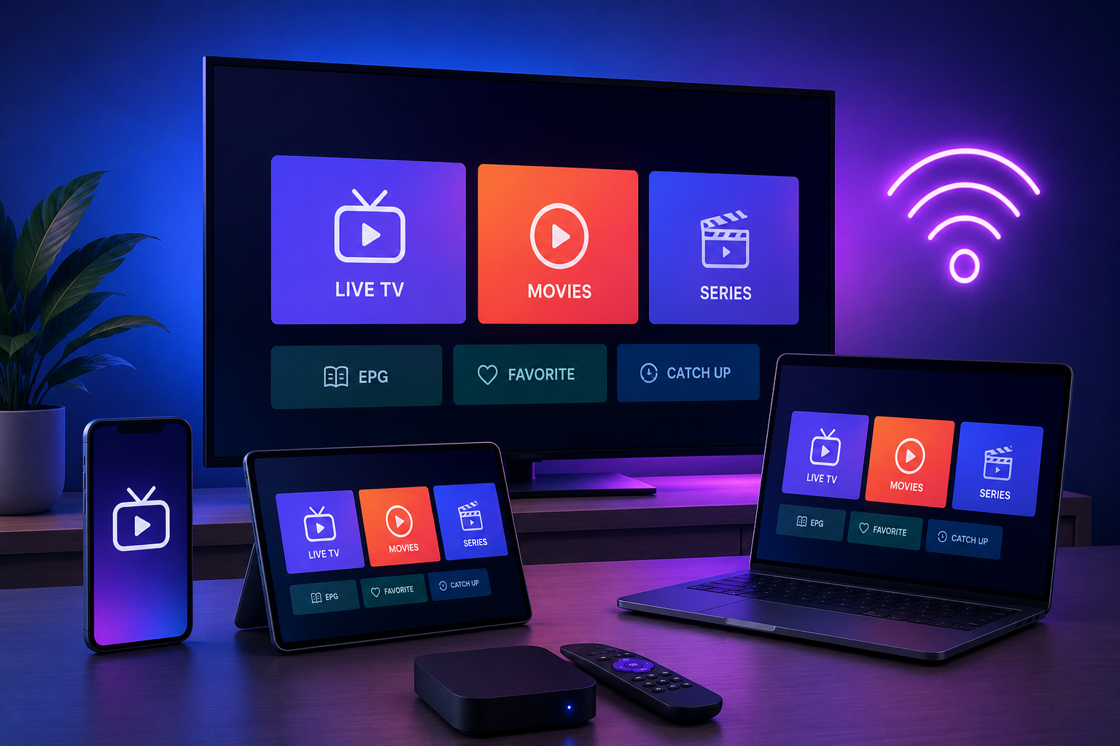
The infrastructure comparison in the image above highlights one of IPTV’s biggest practical advantages: one fiber or broadband connection carries both your internet and your TV signal. That means less equipment cluttering your living room, one unified bill, and the freedom to watch anywhere in the house without a cable outlet nearby.
Who Is IPTV For?
IPTV isn’t right for everyone, but it fits certain user profiles extremely well. Here’s who gets the most value from it.
- Cord-cutters and budget-conscious households. If you want live television without the $120 monthly cable bill, IPTV gives you the same experience for a fraction of the price.
- Live sports fans. People who follow football, boxing, MMA, basketball, cricket, or tennis often choose IPTV because it bundles several premium sports networks into one affordable package.
- Expatriates and international viewers. IPTV services carry channels from the US, UK, Canada, India, the Middle East, Latin America, and beyond — ideal when your home country’s channels aren’t available locally.
- Travelers and RV owners. As long as you have an internet connection, your IPTV subscription follows you. No dish alignment, no moving appointment, no hotel cable limitations.
- Tech-savvy users who want multi-screen flexibility. If your family fights over the living room TV, IPTV’s multi-device support means everyone can watch something different at the same time.
How to Get Started with IPTV: Practical Steps
Ready to cut the cord? Follow these six steps to go from “researching IPTV” to watching your first live channel in under an hour.
- Check your internet speed. Run a speed test and aim for at least 25 Mbps on a wired connection or strong Wi-Fi. If you want 4K streams, go for 50 Mbps or higher.
- Choose a reliable provider. Read recent reviews on Reddit and trustpilot-style sites. Never buy a year-long plan from a brand-new unknown service — start with one month to test channel stability and stream quality.
- Install an IPTV player app. On Firestick, install TiviMate, IBO Player, or IPTV Smarters Pro. On Smart TVs, use the native app store to find the same apps. On Android or iOS, the same apps are available from their respective stores.
- Enter your playlist or credentials. The provider’s welcome email will include your M3U URL, Xtream Codes login, or portal URL. Paste this into your chosen player app and let it load the channel list.
- Configure the EPG. Assign the EPG link inside the app settings so your channel list shows proper program schedules. Without this, you’ll see channels but no show titles.
- Use a VPN for privacy. A VPN adds a layer of anonymity and can reduce throttling from your internet provider. Choose a VPN with a kill switch so your activity never falls back to an unprotected connection.
Final Subscription Window:
Main Offer Today →Affiliate Disclosure: Clicking this secure link verified by our network supports our team through standard partnership terms at zero extra cost to your invoice.
Frequently Asked Questions
Q: How does IPTV work on a Smart TV?
IPTV works on a Smart TV through a dedicated IPTV player app installed directly from the TV’s app store. After installing an app like IPTV Smarters or TiviMate, you enter your provider’s M3U playlist URL or Xtream Codes login. The app downloads the channel list, connects to the provider’s servers, and decodes the video streams in real time. Because no additional hardware is needed, your Smart TV just needs a stable internet connection via Wi-Fi or ethernet.
Q: What is the best IPTV service for live sports?
The best IPTV service for live sports is one that bundles major networks like ESPN, Sky Sports, beIN Sports, DAZN, BT Sport, and Premier Sports into a single package. Providers that own their servers and offer multiple country options tend to deliver the most stable sports streams. Look for a service with 4K sports channels, a reliable EPG for match schedules, and a free trial so you can test latency before paying. A solid rule is to start with a one-month plan and watch a live weekend match before committing longer.
Q: How do I set up IPTV on a Firestick?
To set up IPTV on a Firestick, first enable “Apps from Unknown Sources” in the device settings if you plan to sideload an app like TiviMate or IBO Player. Alternatively, install IPTV Smarters Pro directly from the Amazon App Store. Once installed, open the app, select “Add Playlist,” and paste your provider’s M3U URL or enter your Xtream Codes credentials. After the playlist loads, assign the EPG link and organize your favorite channels. Finally, consider installing a VPN app on the Firestick to keep your IPTV activity private.
Q: IPTV vs cable — which is better?
IPTV is better for viewers who care about price, international channels, multi-device flexibility, and live sports value. Cable is better if you prefer guaranteed reliability, official customer support, and never worrying about legal gray areas. IPTV typically costs $10 to $20 per month versus $80 to $150 for cable, but it depends on a strong broadband connection. If your internet is stable and you are comfortable choosing a reputable provider, IPTV delivers far more content per dollar.
Q: Is IPTV legal in the US?
IPTV itself is a perfectly legal technology in the US — many legitimate services deliver television over internet protocols. What determines legality is whether the provider holds proper distribution rights for the channels it offers. Unlicensed IPTV services rebroadcast premium networks without paying content owners, which is illegal for the provider. As a viewer, the risk is lower, but subscribing to a clearly unlicensed service can still expose you to account shutdowns and potential legal advisory notices. To stay safe, choose a provider that is transparent about its licensing and content rights.
Q: Where can I buy a reliable IPTV subscription?
A reliable IPTV subscription comes from a provider with stable servers, a responsive support team, and transparent pricing. The service I recommend after testing multiple providers is available at buyiptv3.com, which offers strong sports coverage, 4K streams, and multiple device support. Before buying from any provider, start with a one-month plan and test the service during peak evening hours. Avoid lifetime deals from unknown sellers — they tend to disappear quickly. Payment options like PayPal or credit card also add a layer of buyer protection.
Q: How do I fix IPTV buffering?
IPTV buffering is usually caused by low internet speed, Wi-Fi interference, or overloaded provider servers. Start by running a speed test and connecting your streaming device via ethernet instead of Wi-Fi. Close background apps that are consuming bandwidth, and set your player app to a lower bitrate or “auto” quality. Using a VPN can also help if your ISP is throttling IPTV traffic. If buffering continues during peak hours, contact your provider — it may be a server capacity issue on their side.
Q: What do Reddit users say about IPTV in 2025?
Reddit users consistently say the same thing about IPTV in 2025: the technology is excellent, but provider choice is everything. Members of communities like r/IPTV and r/IPTVReviews warn against paying for large multi-year plans and recommend testing with a monthly subscription first. Many users report that unlicensed services are routinely taken offline, which is why the top-rated providers are the ones with transparent ownership and stable infrastructure. The common conclusion is that a quality IPTV service combined with a VPN gives you more live sports and international TV for less money than any cable alternative.
Conclusion: Should You Switch to IPTV?
IPTV is no longer an obscure hacker tool — it is a mainstream alternative to cable used by millions of households for one simple reason: it delivers more channels, more sports, and more flexibility at a fraction of the cost. Yes, it depends on a solid internet connection, and yes, provider choice matters enormously. But if you follow the practical steps in this guide, test a one-month plan on your Smart TV or Firestick, and use a VPN for privacy, IPTV can easily replace your cable box and improve your viewing experience.
If you want to skip the trial-and-error phase, the provider I recommend after my testing is available at buyiptv3.com. It offers the kind of stable live sports coverage, international channel line-ups, and 4K quality that most cable companies simply cannot match. Sign up for one month, plug the playlist into your favorite IPTV player, and see why so many viewers have already made the switch.